For investors
Cutting rock and concrete where access is difficult.
Rockslice is developing a compact system that cuts rock and concrete from one side. Several prototypes have cut stone and concrete. We are now integrating the complete system for field tests.
The problem
Small removals. Large operations.
Tunnels, power stations and other structures that must stay in use need openings, repairs and space for new equipment. The section to remove is small. The work around it rarely is.
Access
The material sits behind a wall, under equipment or deep in a structure. Reaching it is often the hardest part.
What stays
Cables, machines and the structure around the cut must stay in use and undamaged.
The whole job
Mounting, water and slurry, lifting the material out and cleanup decide the real cost and schedule.
The invention
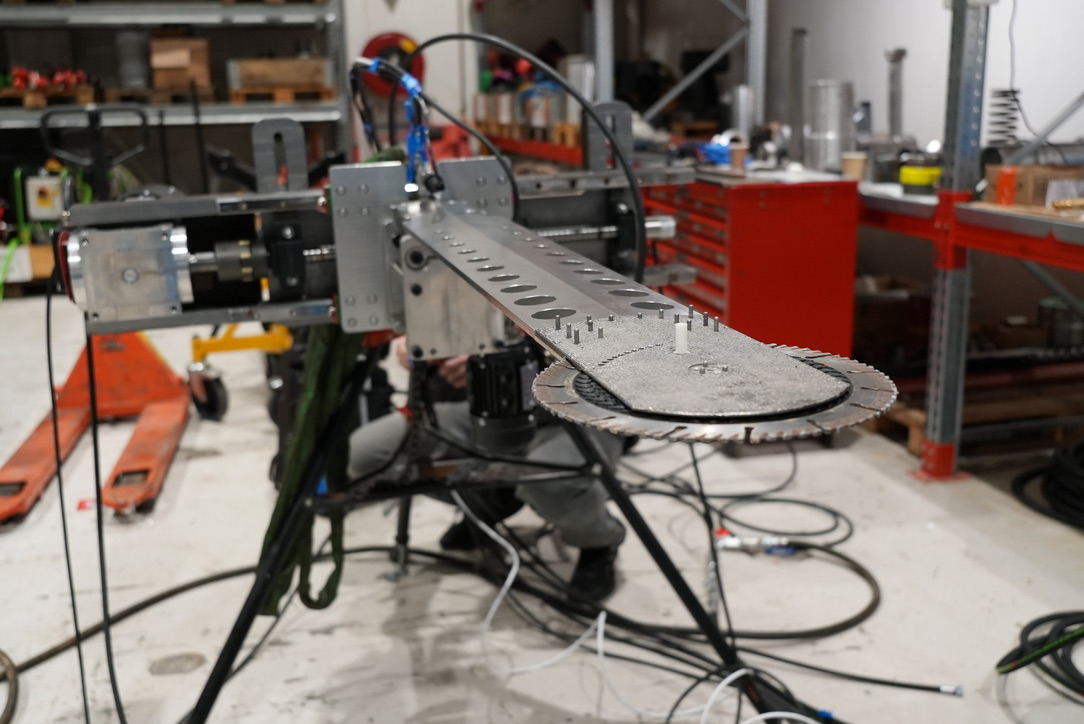
The cut happens at the end of the arm.
The blade cuts the material. The water drives the blade.
A compact blade and drive at the end of a slender arm cut from one side.
See how it worksPatent
Patented technology
Granted in Norway in 2025. Positive international report in 2026.
- Norway (granted)
- Europe (pending)
- US (pending)
- Japan (pending)
- China (pending)
- South Korea (pending)
- Australia (pending)
- Canada (pending)
Evidence and next milestone
Tested in the workshop. Field tests are next.
- Tested
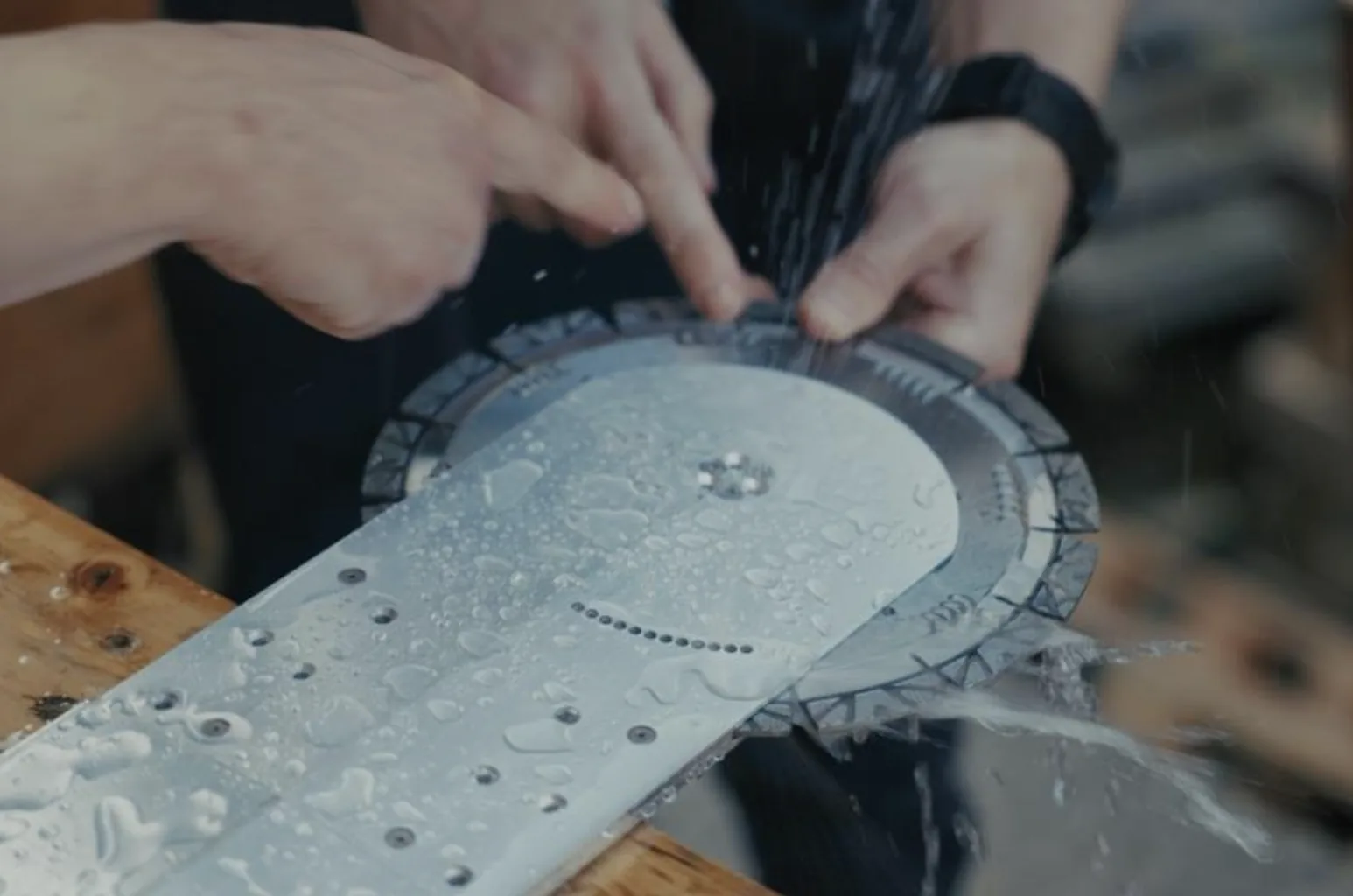
Prototypes have cut stone and concrete
Several prototypes built and tested on rock blocks and concrete.
- In progress
System integration
Pump, rail, carriage, arm and head are being put together as one system.
- Ahead
First field test
A first accessible job, chosen to learn about operation and equipment.
- See testing and development
Where it starts
Tunnels and hydropower.
Owners there need openings, equipment space and repairs in structures that stay in service. A first concrete task at a hydropower site is planned. Utility work and concrete rehabilitation are related applications to assess later.
See applications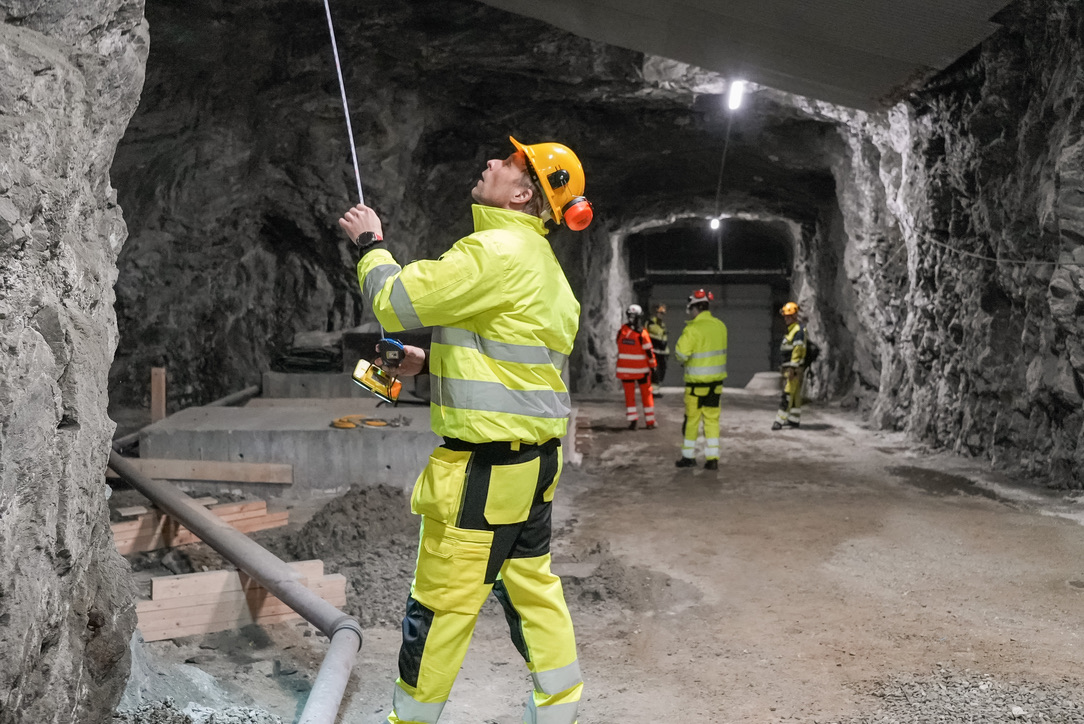
The business
Equipment and replacement blades.
The intended model: useful jobs lead to repeat use, active equipment and demand for new blades. Training and support come with the equipment.
- Step 1
A useful job
A tunnel or hydropower job where the whole operation becomes simpler.
Depends onCustomer value over the whole job
- Step 2
Repeat use
The same owner or contractor chooses it again for similar work.
- Step 3
A method teams can repeat
Setup, cutting, water handling, lifting and cleanup described, with training and support.
- Step 4
More crews, more rigs
More teams, then related applications once each has been tested.
Depends onHow often a rig is actually used
- Step 5
Replacement blades
Every rig in use wears out blades. Blade demand follows active equipment.
Depends onBlade wear and blade life
Each step depends on the one before. Field tests must first show customer value, blade life and how often the equipment is used.
The larger ambition
Our ambition is to set a new standard for how the world cuts rock and concrete.
- Keep what stands
- Remove only the section that has to go.
- Reuse concrete
- Cut pieces that could be used again. A reuse task is planned.
- Rock for concrete
- Cut rock replacing some new concrete. So far only a modelled idea.
Ambition Preservation and reuse are ambitions. Any environmental benefit still has to be measured.
Backed by
In the news
- TV 2Norwegians could solve Europe's biggest waste problem(opens in a new tab)
- ShifterRockslice awarded up to NOK 6.6 million in grants27 Jan 2026(opens in a new tab)
- ShifterRobotics talent from California to Bergen8 Jan 2026(opens in a new tab)
- SpareBank 1 Sør-NorgeFrom Minecraft to reality(opens in a new tab)
Investing or partnering? Let's talk.
Tell us what you are looking at. We share technical detail and plans in conversation.